



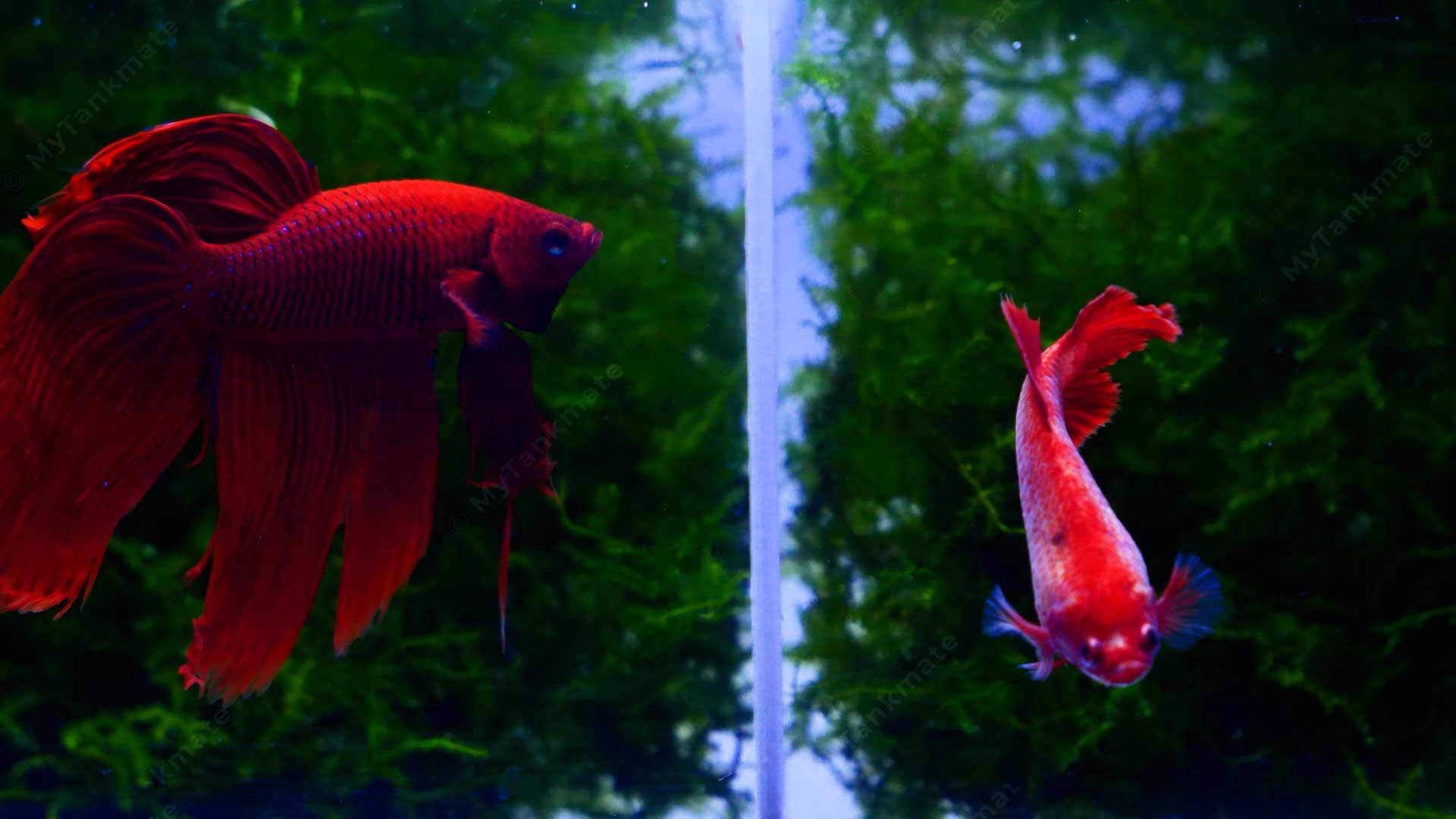
The Siamese fighting fish (Betta splendens) is known for its aggression — especially between males. But breeding reveals a completely different side of this species.
Controlled Introduction
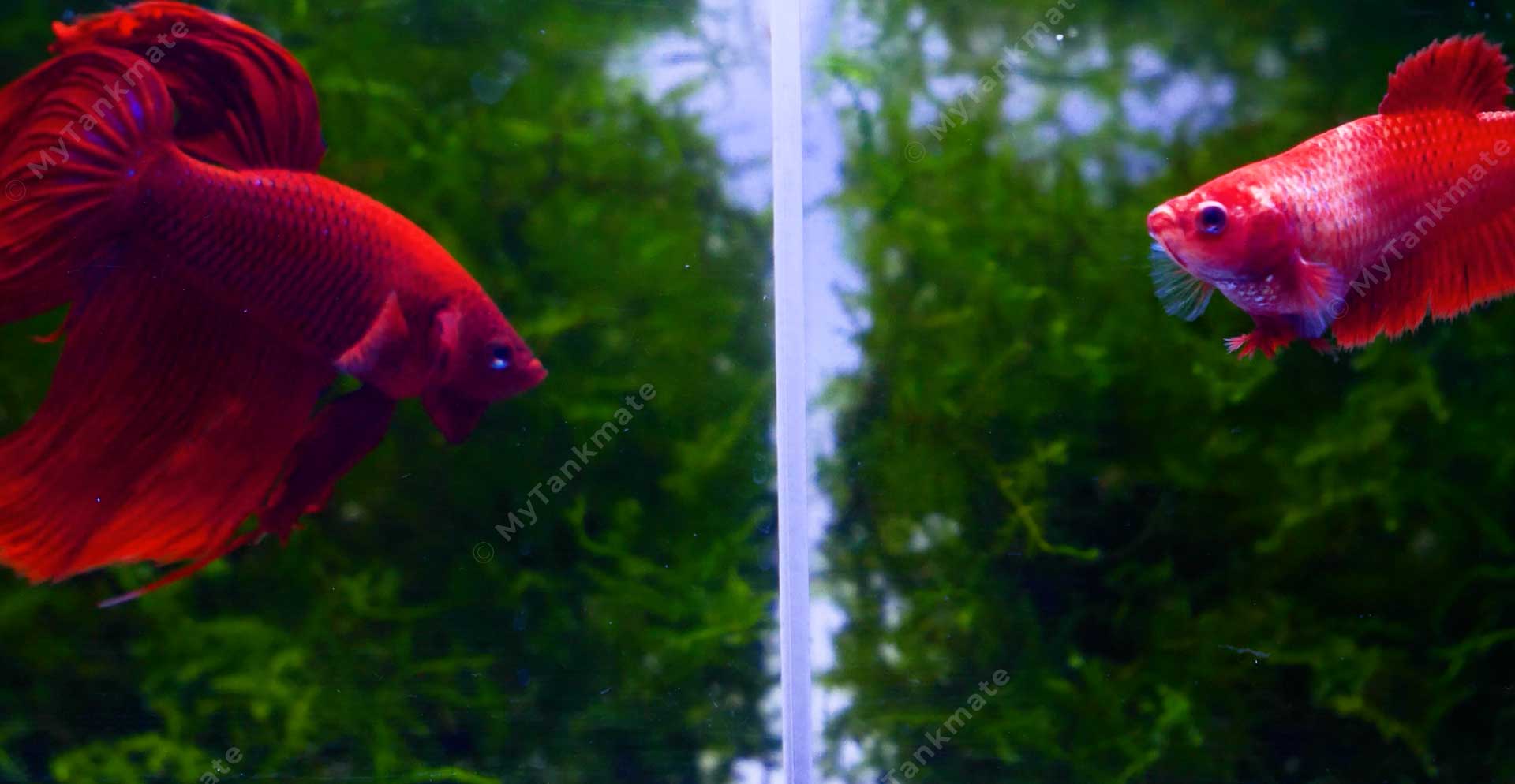
Even when both fish are ready to breed, direct contact is risky. A transparent barrier is typically used during the initial phase. This allows the male and female to see each other and build interest, while preventing physical harm.During this stage, visual interaction triggers hormonal and behavioral responses necessary for spawning. Only once both fish show clear signs of readiness should the barrier be removed.
The Bubble Nest
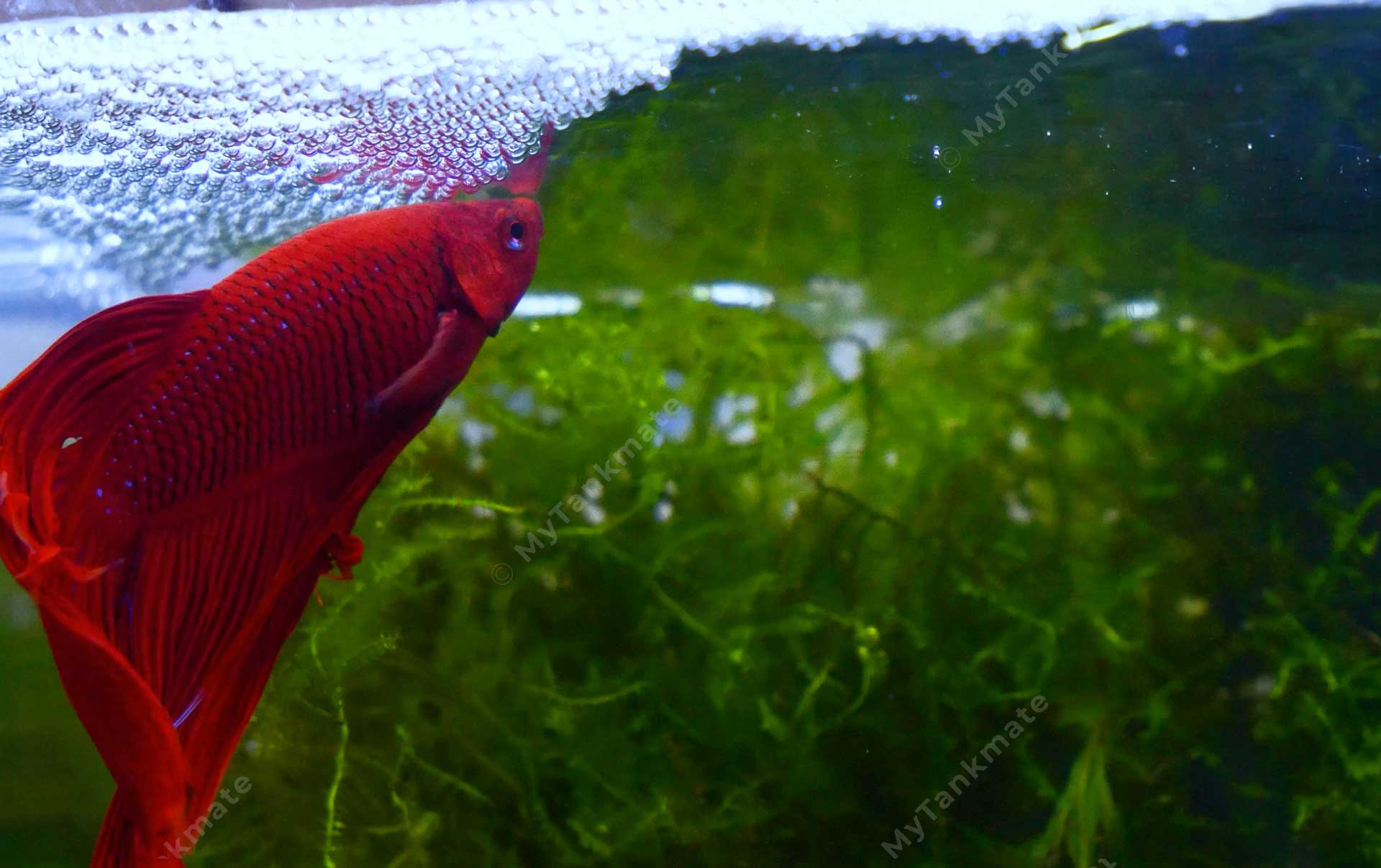
Once stimulated, the male begins constructing a bubble nest at the water surface. He gulps air and mixes it with mucus, forming stable bubbles that cluster together. This structure acts as a floating incubation site for the eggs. This behavior is closely linked to their natural habitat. Betta fish originate from shallow, low-oxygen waters. Their labyrinth organ allows them to breathe atmospheric air, and the bubble nest ensures that eggs and larvae remain in an oxygen-rich zone.
Spawning
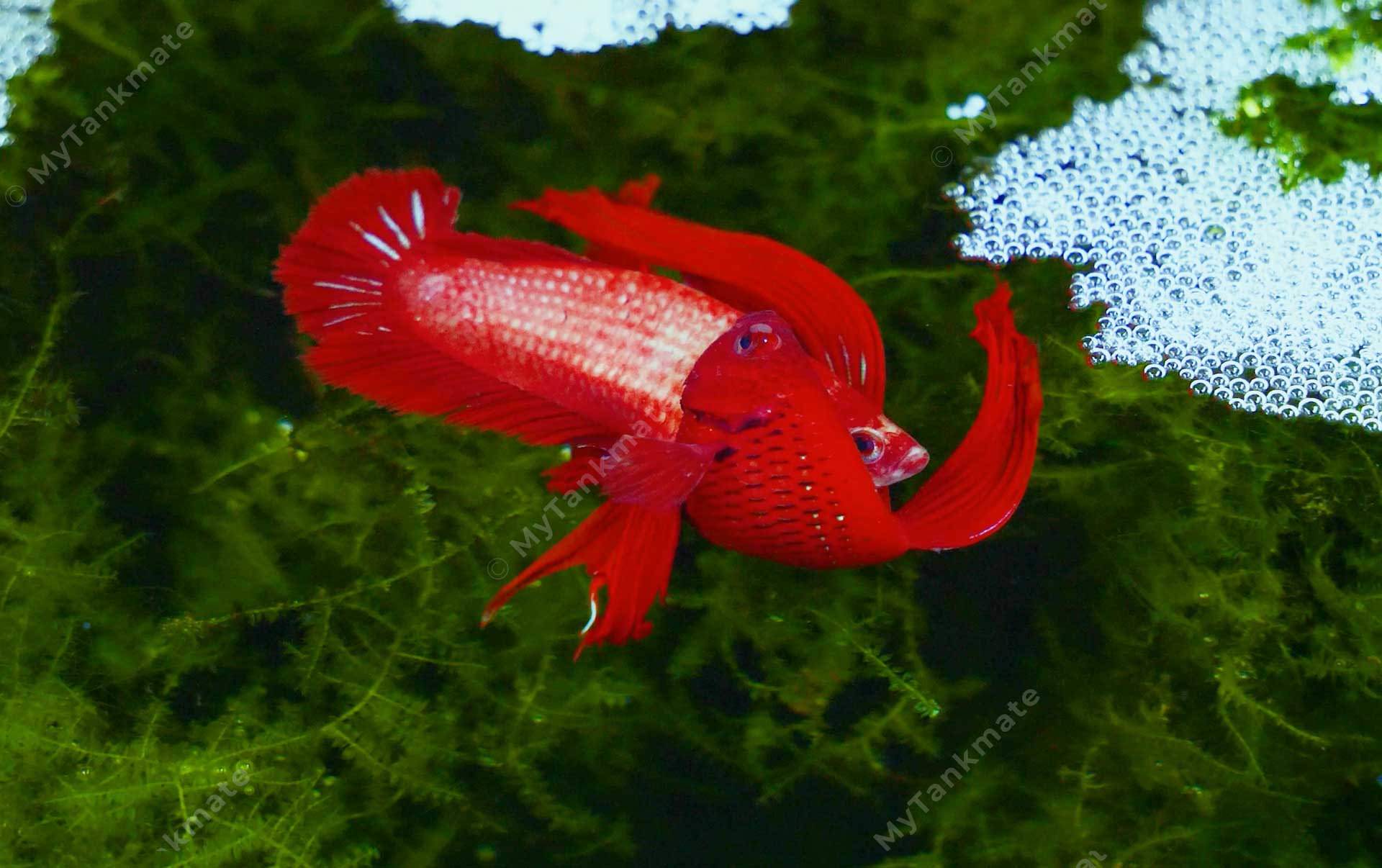
When the barrier is removed, interaction becomes physical — but controlled. The pair engages in a series of movements often described as a “wrapping” behavior. The male curls his body around the female, triggering the release of eggs and fertilization. After each embrace, the male collects the sinking eggs and places them into the bubble nest. This process repeats multiple times until spawning is complete.
Eggs Protecting
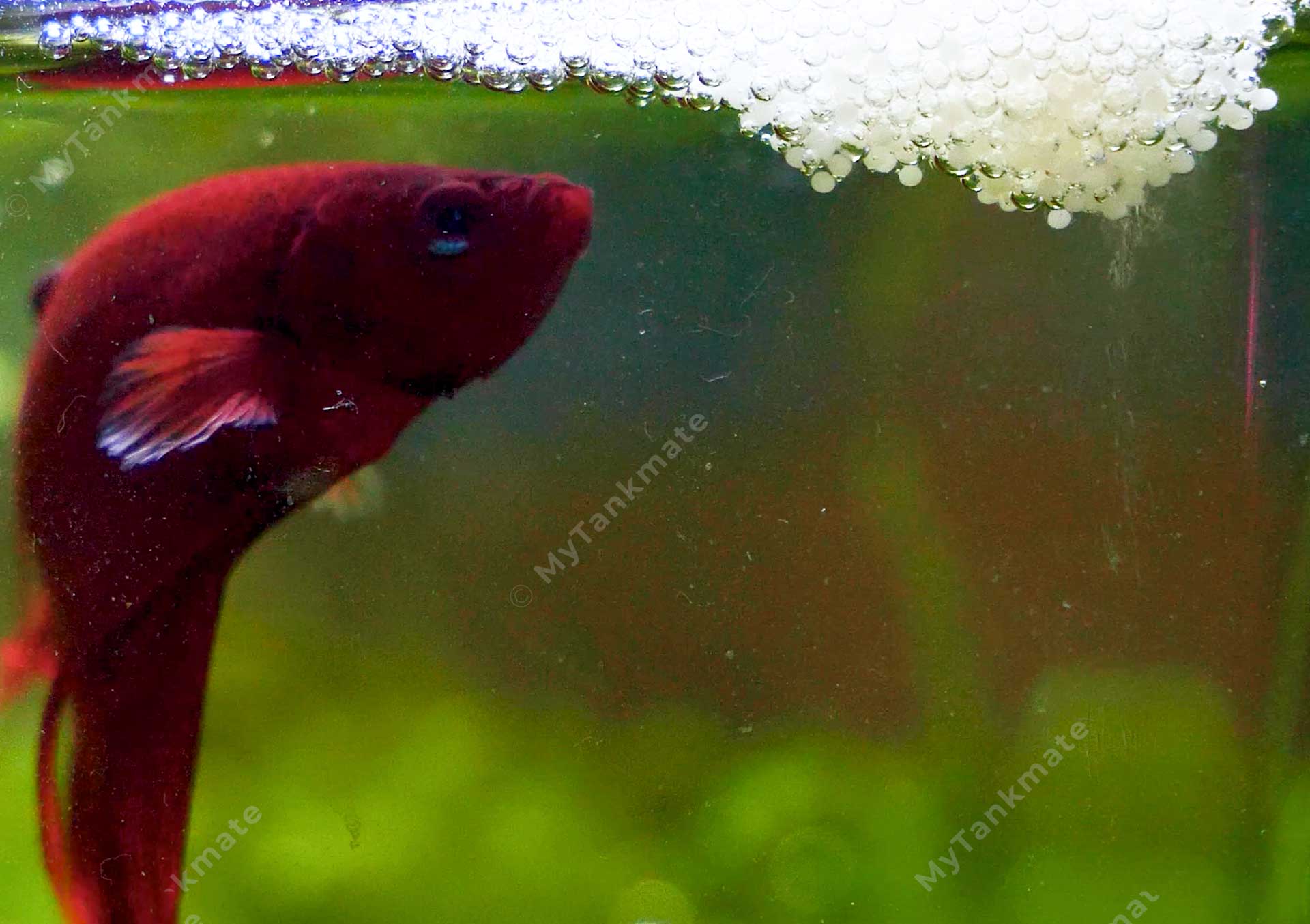
Once spawning is complete, the female should be removed. At this stage, the male becomes highly territorial and fully focused on egg protection. In natural environments, this behavior protects the brood from predators and environmental threats. The male remains under the nest, constantly monitoring and maintaining it. He continuously inspects the eggs, removes unfertilized or damaged ones, and repairs the bubble structure as needed.If conditions change — such as light, temperature, or oxygen levels — he may even relocate the entire nest. This behavior reflects a high level of environmental sensitivity and instinct-driven optimization.
Hatching
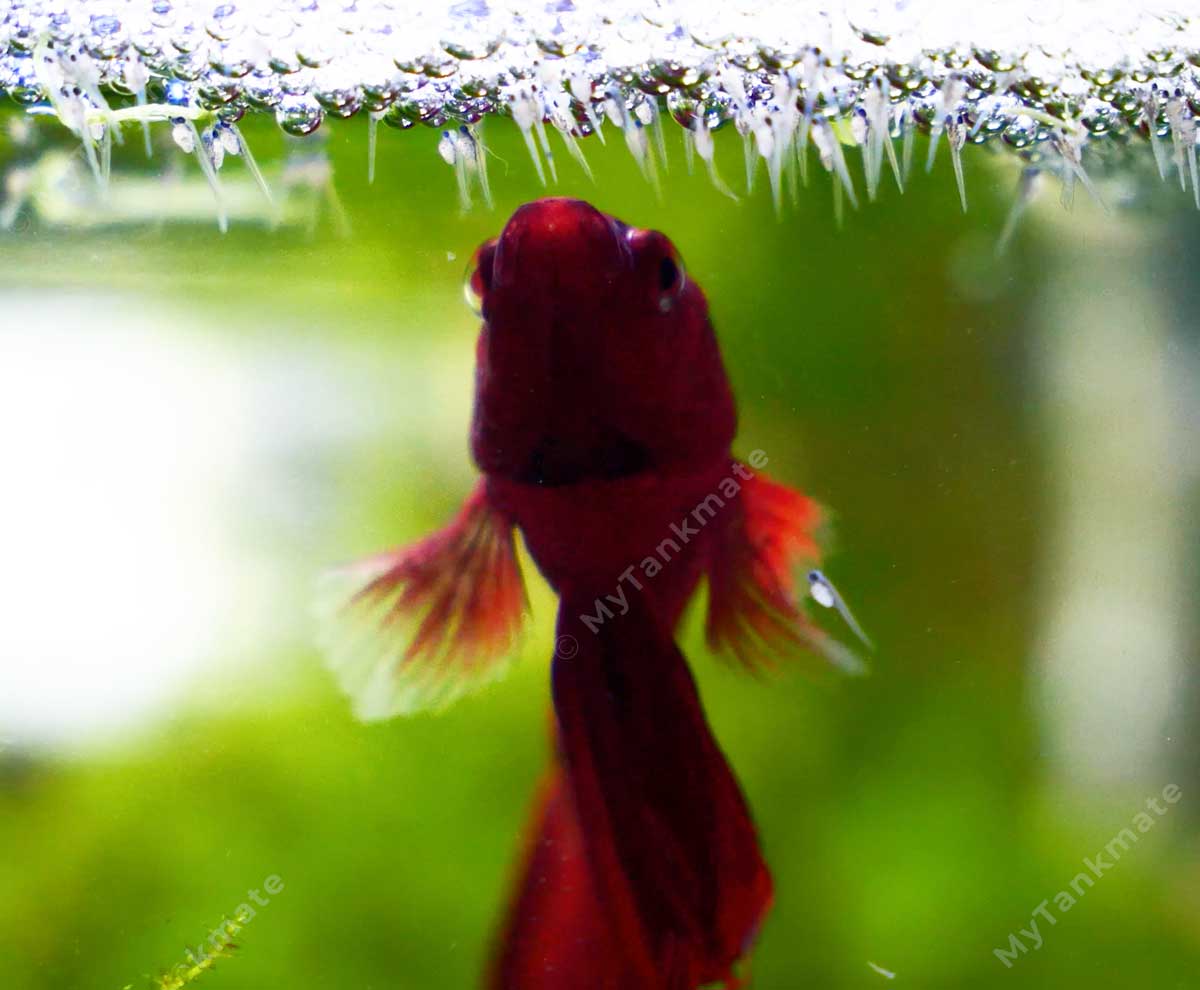
Under typical conditions (around 26–28 °C), the eggs hatch within 24 to 36 hours, depending on temperature.At this stage, they cannot swim properly and lack full control of their bodies. Many fall from the nest, and the male repeatedly retrieves them and places them back. They rely entirely on their yolk sac for nutrition during these early days.