



Red Neon Blue Eye
Pseudomugil luminatus
Parameters
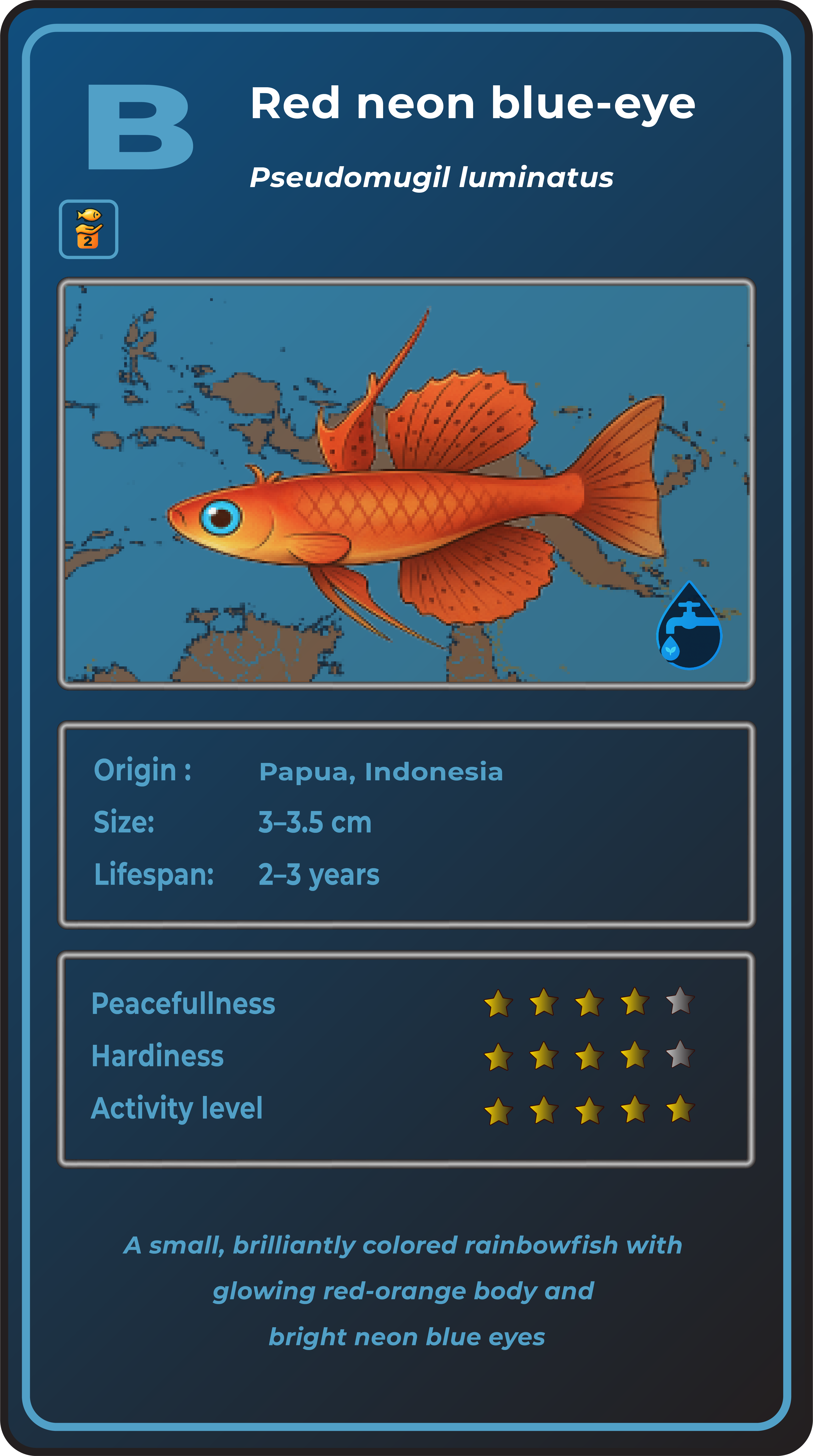
Care Level
Easy
Temperament
Peaceful
Max Size
3 cm
Lifespan
3–5 years
Temperature
22–28 °C
pH
6.0–7.5
Hardness
Soft to Moderate
Min Tank Size
40 L
Diet
Omnivore
Swimming Level
Top to Mid
Notes
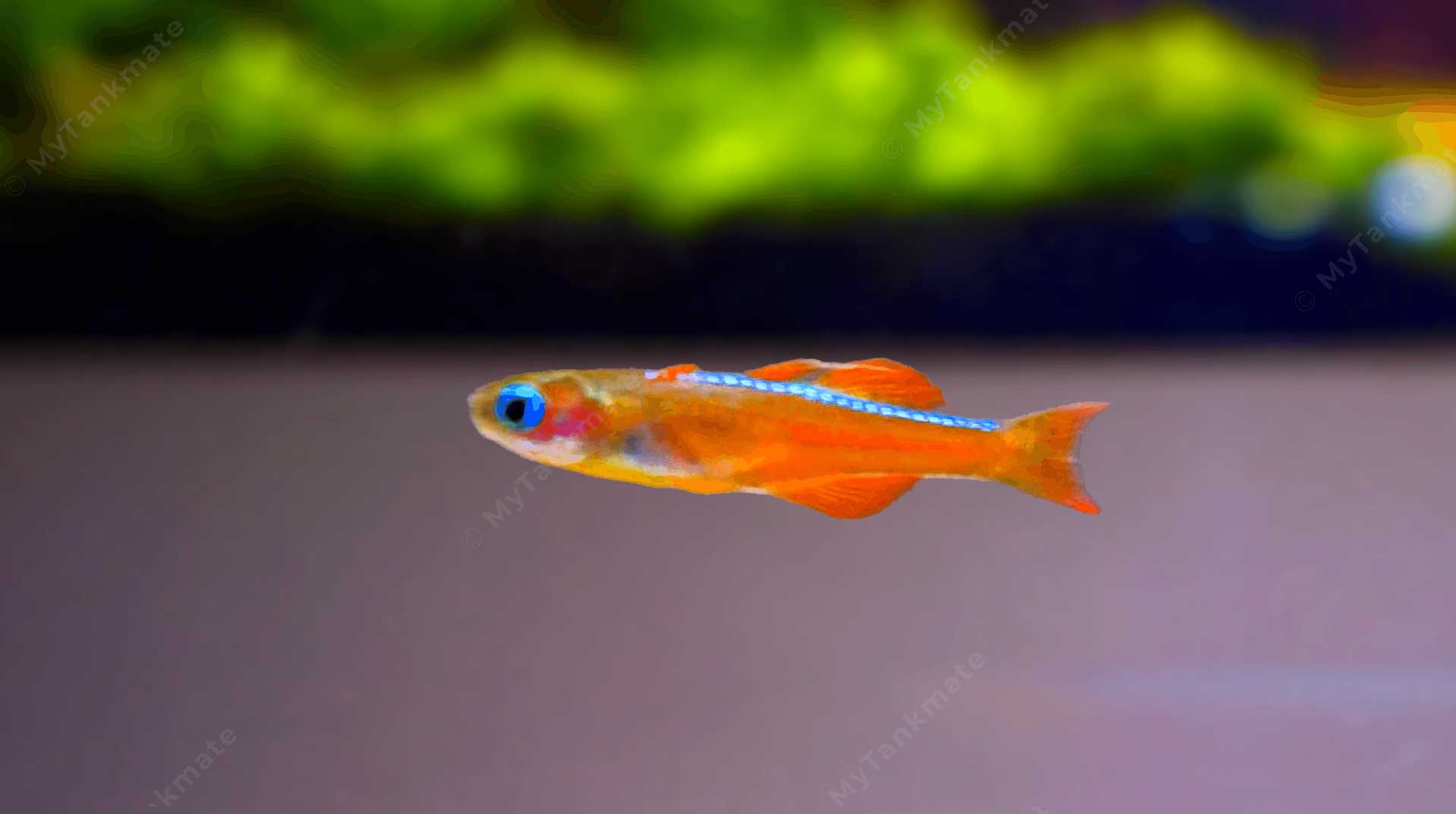
The Red Neon Blue Eye is a stunning nano fish that thrives in densely planted tanks. They do best in groups of 6 or more, as they are shoaling fish and feel more secure in numbers. Males display their brightest colors when kept with females or when competing with other males. Avoid keeping them with large or aggressive tankmates. A gentle filter is recommended as they prefer slow-moving, clean water.
Spotlight
The red neon blue-eye is one of the smallest rainbowfish in the world — but it carries a presence far bigger than its size. With its glowing red-orange body and striking neon blue eyes.This fish has gained a surprising amount of love among aquarists around the world.
Origin — Hidden in the Forest Waters of Papua

The red neon blue-eye was first discovered in shallow, slow-moving waters in the Timika region of Papua, Indonesia. These environments are heavily shaded by dense jungle canopy, creating soft, slightly acidic, and warm water conditions.
The water in their natural habitat has a distinctive warm amber color — and it comes entirely from the environment around it. Fallen leaves, submerged roots, and decaying forest debris slowly release tannins as they break down, staining the water the color of brewed tea.
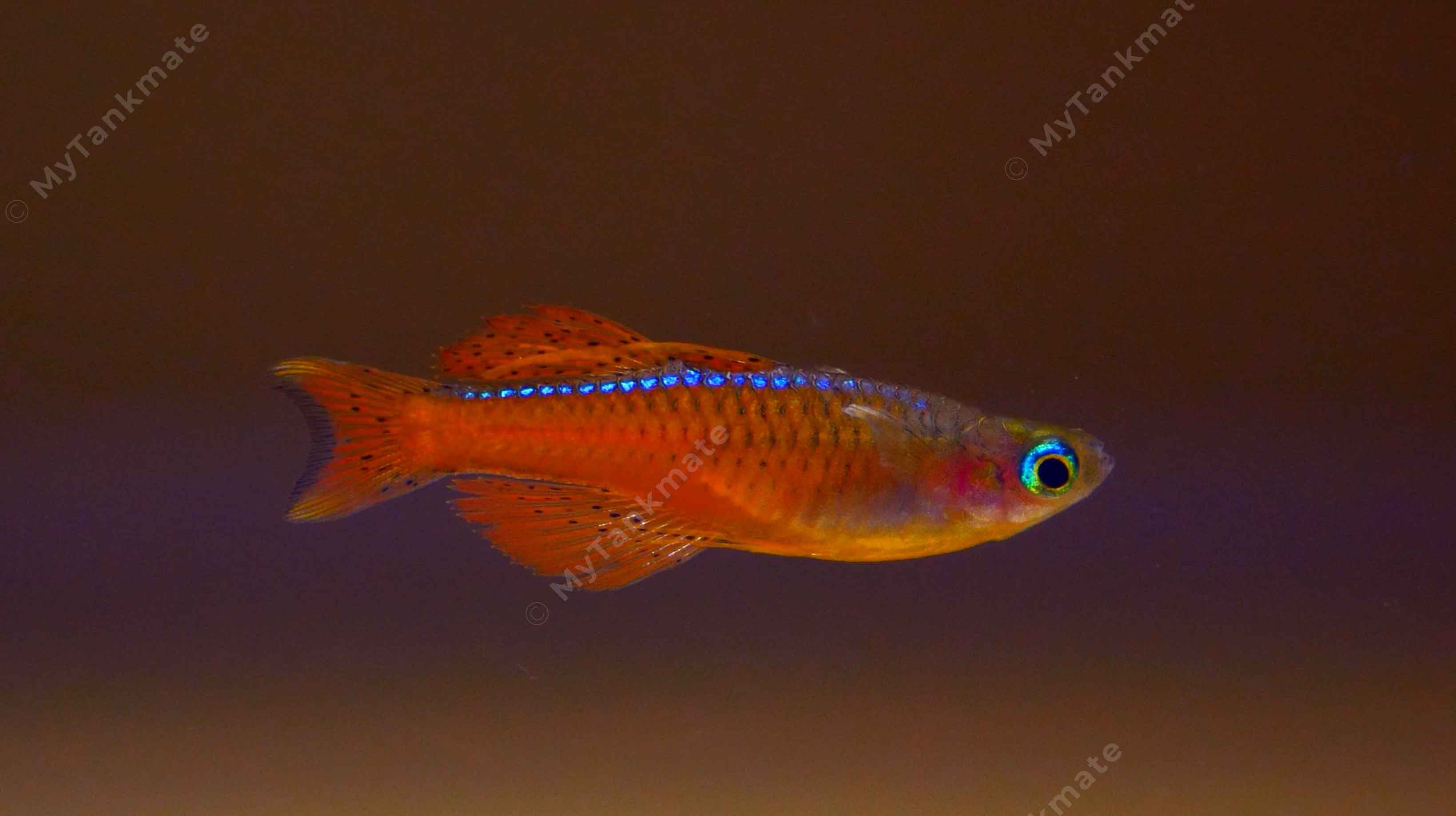
This kind of water — often called blackwater — is naturally soft, slightly acidic, and low in minerals. It's also where the blue in their eyes looks most striking. The dark, tinted background makes that neon glow genuinely pop.In these dim conditions, visibility is reduced, so those reflective colors become more noticeable — and that might actually help them recognize each other more easily. On regard to their bluish glow — they don’t actually have any blue pigment. True blue is rare in nature. What you’re seeing is structural color, formed by light reflecting off microscopic layers rather than a real blue pigment.
A Dance of Dominance
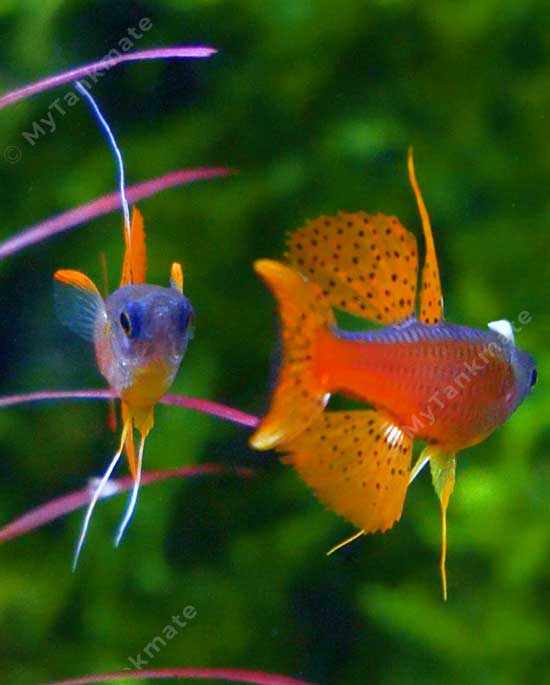
Even though they are not aggressive at all, the males still try to show dominance. To do this, they flare their fins and slowly circle around each other. What follows can look like a dance-like display, as both fish mirror and respond to each other’s movements. It’s a fascinating behavior to watch for any fish keeper.